I Only Look at My Profit & Loss Report. Is That Enough?
Business Owner Resource Library • 5-minute read
Have you ever opened your financial reports, looked at your Profit & Loss report, and ignored everything else?
If so, you're not alone.
For many business owners, the Profit & Loss report is the only financial report they regularly review. It shows your income, expenses, and whether your business made a profit during a specific period.
That's valuable information—but it doesn't tell the whole story.
As your business grows, understanding more than just your Profit & Loss report can help you make better financial decisions and prepare for future opportunities.
The Misconception
Many business owners think:
"As long as my Profit & Loss report looks good, my business must be doing well."
The Profit & Loss report is one of the most important financial reports you'll use.
But it answers only one question:
"How did my business perform over a period of time?"
It doesn't tell you:
How much your business owns.
How much your business owes.
How much your customers still owe you.
How much debt your business has.
Your overall financial position today.
For those answers, you need another report.
The Reality
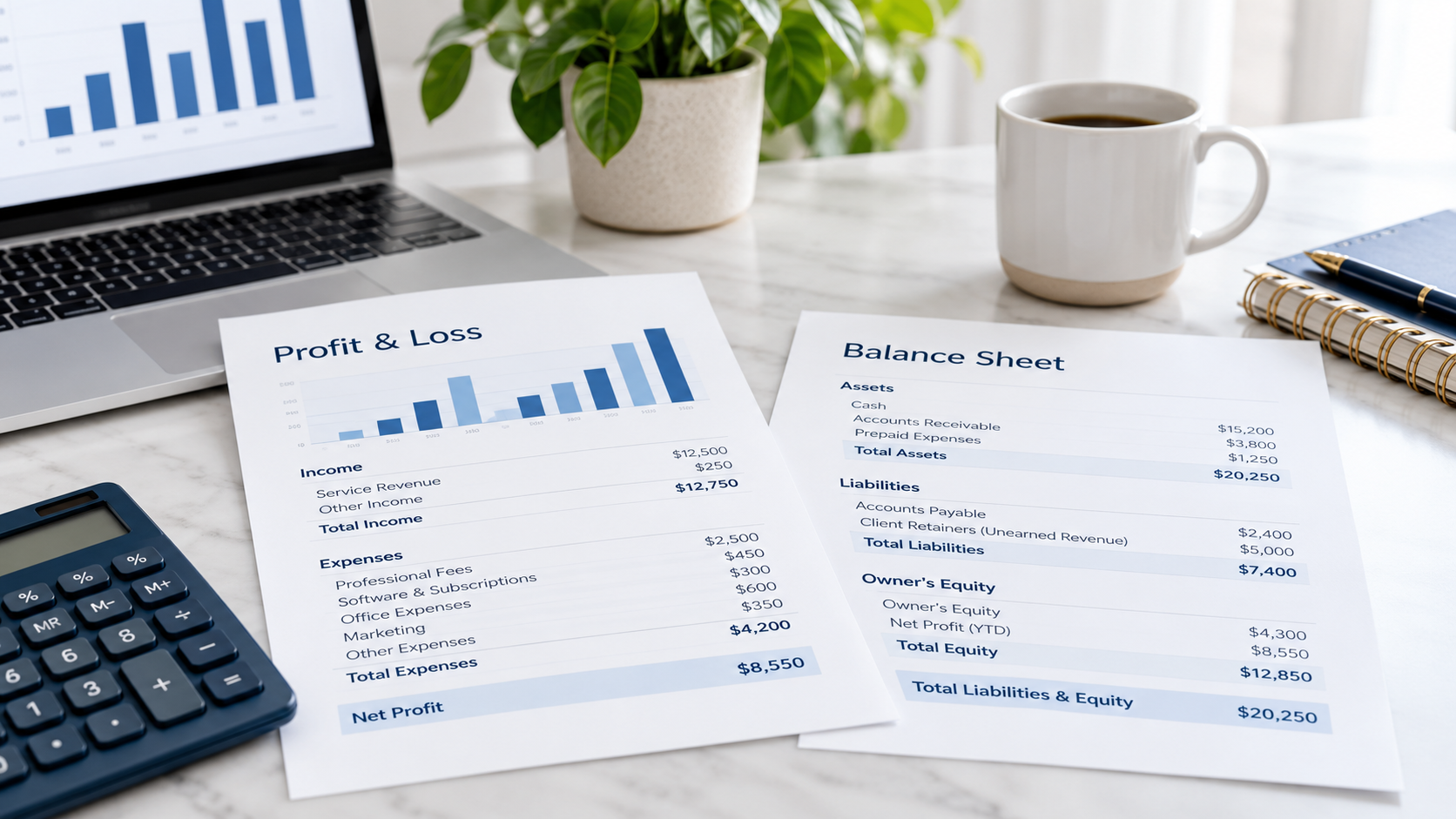
Your Profit & Loss report and Balance Sheet work together.
Think of them as telling two different parts of your business's story.
Your Profit & Loss report shows how your business performed over a period of time by reporting your income and expenses.
Your Balance Sheet provides a snapshot of your business at a specific point in time. It shows what your business owns (assets), what it owes (liabilities), and your owner's equity.
Neither report is better than the other.
They simply answer different questions.
Together, they provide a much more complete picture of your business.
A Practical Example
Imagine your business earned $250,000 this year.
Your Profit & Loss report shows a healthy profit, and you're excited because your business had a great year.
But your Balance Sheet also tells you:
Your business has $40,000 in outstanding customer invoices that haven't been collected yet.
You still owe $85,000 on a business loan.
You have $18,000 in credit card debt.
Your business owns equipment and other assets that have value.
Without looking at your Balance Sheet, you would never see those pieces of your financial picture.
Your Profit & Loss report tells you how your business performed.
Your Balance Sheet tells you where your business stands today.
You need both to truly understand your business.
Why It Matters
As your business grows, your Balance Sheet becomes increasingly important.
It can help you:
Understand your overall financial position.
Prepare for conversations with lenders.
Apply for business loans or lines of credit.
Evaluate whether your business is taking on too much debt.
Better understand your assets and liabilities.
In many cases, if you apply for financing, one of the first things a lender will ask for is your Balance Sheet.
That's because it provides information your Profit & Loss report simply can't.
Key Takeaways
Your Profit & Loss report tells you how your business performed over a period of time.
Your Balance Sheet shows your business's financial position at a specific point in time.
Both reports are important because they answer different questions.
Understanding both reports helps you make more informed business decisions.
As your business grows, your Balance Sheet becomes an increasingly valuable tool.
Important
Every business is different. This article is intended for general educational purposes and shouldn't be considered accounting or tax advice for your specific situation. If you have questions about how this topic applies to your business, I'd be happy to learn more during a no-obligation Discovery Call.
More Resources