Why Your Bookkeeper and Tax Professional Should Work Together
Business Owner Resource Library • 5-minute read
Have you ever wondered why your tax professional keeps asking for information you thought they already had?
You're not alone.
Many business owners assume their bookkeeper and tax professional perform the same role.
While they often work closely together, they actually serve different purposes—and when they communicate effectively, your business benefits.
Understanding how those roles complement each other can save time, reduce stress, and make tax season much smoother.
The Misconception
Many business owners think:
"As long as I have a CPA, I don't really need a bookkeeper."
Or...
"Once my bookkeeping is done, my tax professional doesn't need anything else."
In reality, each professional brings a different area of expertise.
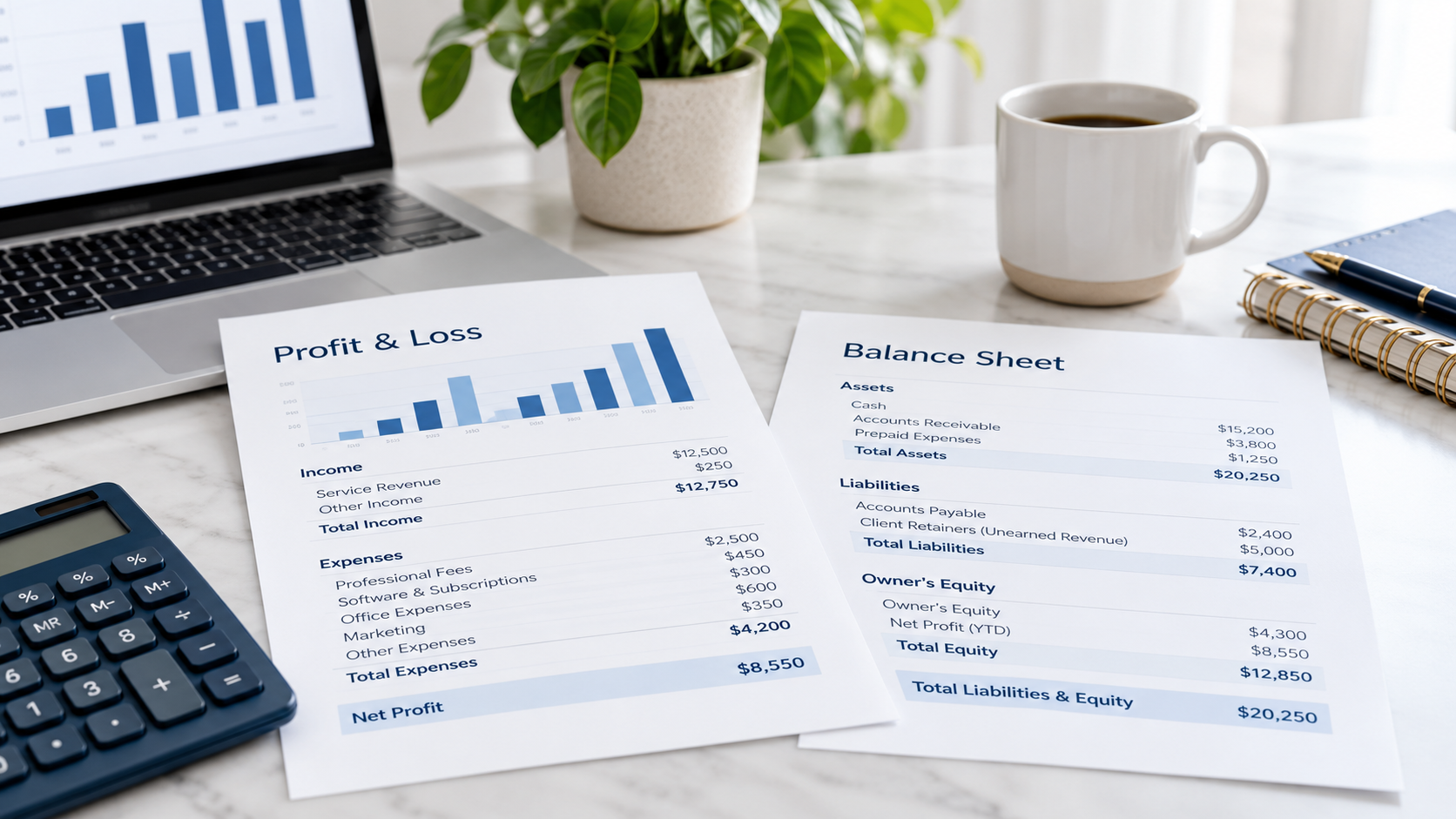
Your bookkeeper focuses on maintaining accurate financial records throughout the year.
Your tax professional focuses on preparing your tax return, providing tax advice, and helping you meet your tax obligations.
When those two work together, everyone has the information they need.
The Reality
Think of your bookkeeper and tax professional as members of the same team.
Throughout the year, your bookkeeper keeps your financial records organized and up to date.
When tax season arrives, your tax professional relies on those records to prepare your tax return accurately and efficiently.
When questions arise, direct communication between your bookkeeper and tax professional often helps resolve issues more quickly and eliminates the need for you to act as the middleman.
Instead of relaying questions back and forth, your financial professionals can work together to keep the process moving smoothly, allowing you to focus on running your business.
A Practical Example
Imagine you're a graphic designer preparing for tax season.
Your tax professional notices a transaction that needs clarification before your tax return can be completed.
Instead of trying to explain the bookkeeping yourself, your bookkeeper and tax professional communicate directly to answer the question and provide any supporting information that's needed.
The issue is resolved quickly, your tax professional has the information they need, and you don't have to spend time interpreting accounting questions or tracking down supporting documentation.
Why It Matters
When your bookkeeper and tax professional work together, you benefit from:
Better communication.
More accurate financial information.
Fewer last-minute questions during tax season.
A smoother tax preparation process.
More time to focus on running your business.
You're not hiring two people to do the same job.
You're building a team that supports your business throughout the year.
Key Takeaways
Your bookkeeper and tax professional have different but complementary roles.
Accurate bookkeeping makes tax preparation more efficient.
Direct communication between your financial professionals can save time and reduce stress.
Working as a team helps create a smoother experience throughout the year—not just during tax season.
Good communication allows you to spend less time coordinating information and more time running your business.
Important
Every business is different. This article is intended for general educational purposes and shouldn't be considered accounting or tax advice for your specific situation. If you have questions about how this topic applies to your business, I'd be happy to learn more during a no-obligation Discovery Call.
More Resources