Why Your Bank Balance Doesn't Tell the Whole Story
Business Owner Resource Library • 5-minute read
Have you ever looked at your bank account and thought, "I have money in the bank, so my business must be doing well?"
If so, you're not alone.
It's one of the most common assumptions business owners make. After all, your bank account tells you how much money you have available today, so it seems like a logical way to judge how your business is doing.
The problem is that your bank balance only tells part of the story.
It doesn't tell you whether you're actually making a profit, whether you have upcoming expenses to cover, or whether your business is becoming more or less financially healthy over time.
Understanding the difference can help you make better business decisions and avoid some very common financial surprises.
The Misconception
Your bank account answers one simple question:
"How much money do I have right now?"
That's important information—but it's not the same as understanding how your business is performing.
For example, your bank balance doesn't tell you:
How much of that money you'll need to pay upcoming bills.
Whether you've actually earned all of the money sitting in your account.
Whether your business was profitable this month.
Whether your income is keeping up with your expenses.
Whether you're building a financially healthy business over the long term.
Looking only at your bank balance is a little like judging a book by reading one page. You have some information, but not enough to see the whole picture.
The Reality
Good accounting and bookkeeping give you a much clearer understanding of your business than your bank balance ever can.
When your financial information is accurate and up to date, you can answer questions like:
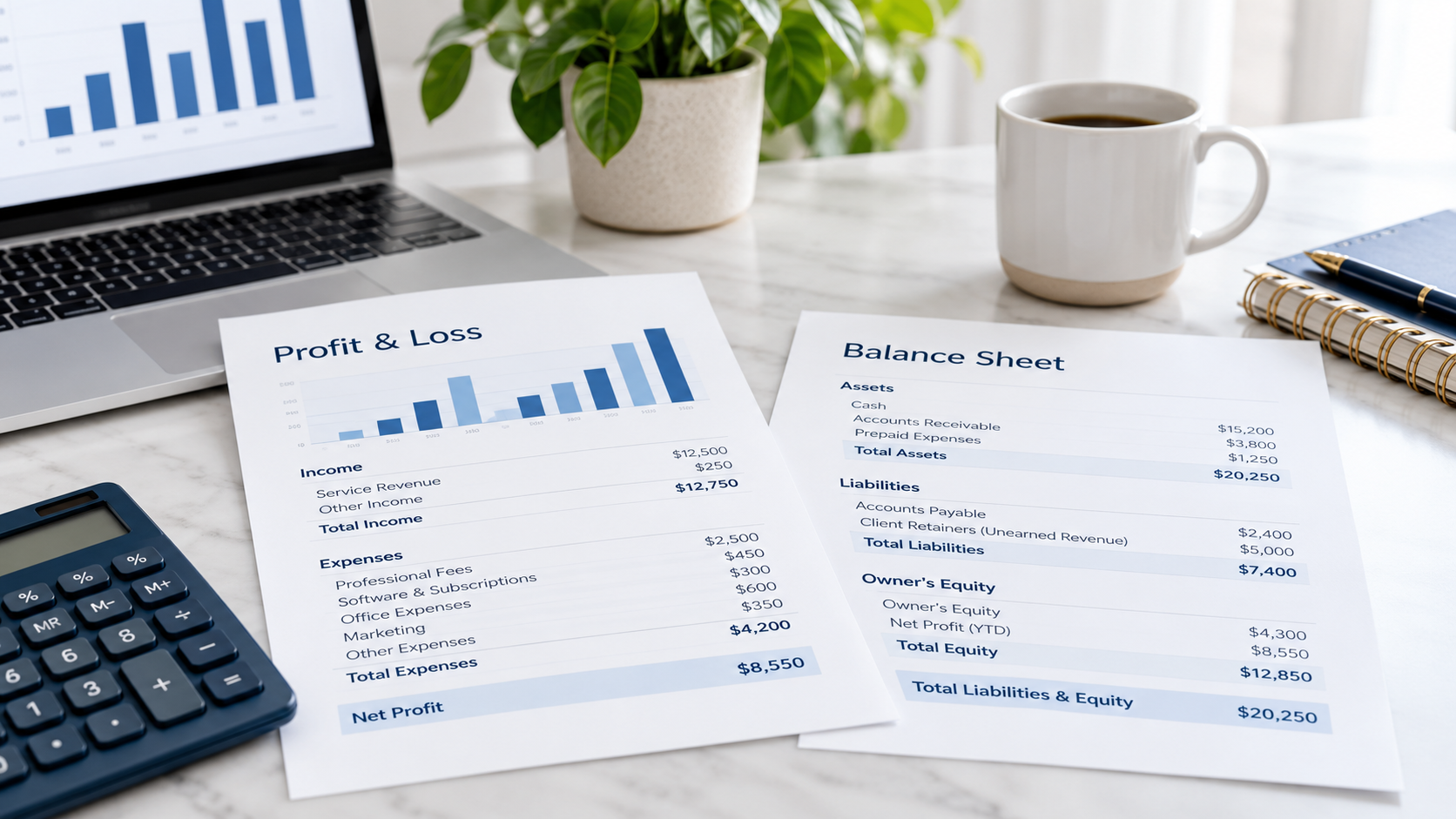
Is my business actually profitable?
Am I earning more than I'm spending?
Are my expenses increasing faster than my income?
Do I have enough cash to cover upcoming obligations?
How is my business performing compared to last month or last year?
Those are the kinds of questions that help you make informed decisions—not just react to what's in your bank account today.
A Practical Example
Imagine you own a marketing agency.
Your business checking account has $50,000, so things feel like they're going well.
But after looking more closely, you realize:
$15,000 is set aside for quarterly tax payments.
$12,000 will be used to cover payroll next week.
$8,000 is for software subscriptions, rent, and other bills due this month.
$5,000 represents customer deposits for work you haven't completed yet.
Suddenly, that $50,000 doesn't represent money that's freely available to spend.
Your bank balance hasn't changed—but your understanding of your financial position has.
That's why accurate accounting and bookkeeping matter. They help you understand not just how much money you have, but what that money actually represents.
Why It Matters
When business owners rely only on their bank balance, they can unintentionally make decisions based on incomplete information.
That might mean:
Spending money that's already spoken for.
Assuming the business is more profitable than it really is.
Waiting too long to adjust spending when profits begin to decline.
Feeling caught off guard when tax payments or large expenses come due.
Accurate accounting and bookkeeping give you the information you need to make decisions with greater confidence instead of relying on assumptions.
Key Takeaways
Your bank balance tells you how much cash you have today—but not how your business is truly performing.
Profitability and cash available are not always the same thing.
Accurate accounting and bookkeeping provide a more complete picture of your business.
Better financial information leads to better business decisions.
Understanding your numbers helps reduce surprises and gives you greater confidence as a business owner.
Important
Every business is different. This article is intended for general educational purposes and shouldn't be considered accounting or tax advice for your specific situation. If you have questions about how this topic applies to your business, I'd be happy to learn more during a no-obligation Discovery Call.
More Resources